Diadem 4th3th Century Bc Found in the Collection of Museum of Russian Art Minneapolis

The Museum of Russian Fine art, located at 35W and Diamond Lake Route in Minneapolis, Minnesota.
In 1991, Raymond E. Johnson, an art dealer and collector, sponsored the first known retail exhibition of Russian Impressionist paintings in North America. The positive response by American collectors to this exhibition encouraged Johnson to launch a large-scale program to identify the finest examples of Russian Realist paintings from throughout the quondam Soviet Union. Since and so, Ray Johnson and his married woman Susan take acquired what is believed to be the largest privately owned collection of Russian Realist paintings outside the borders of the erstwhile Soviet Union.
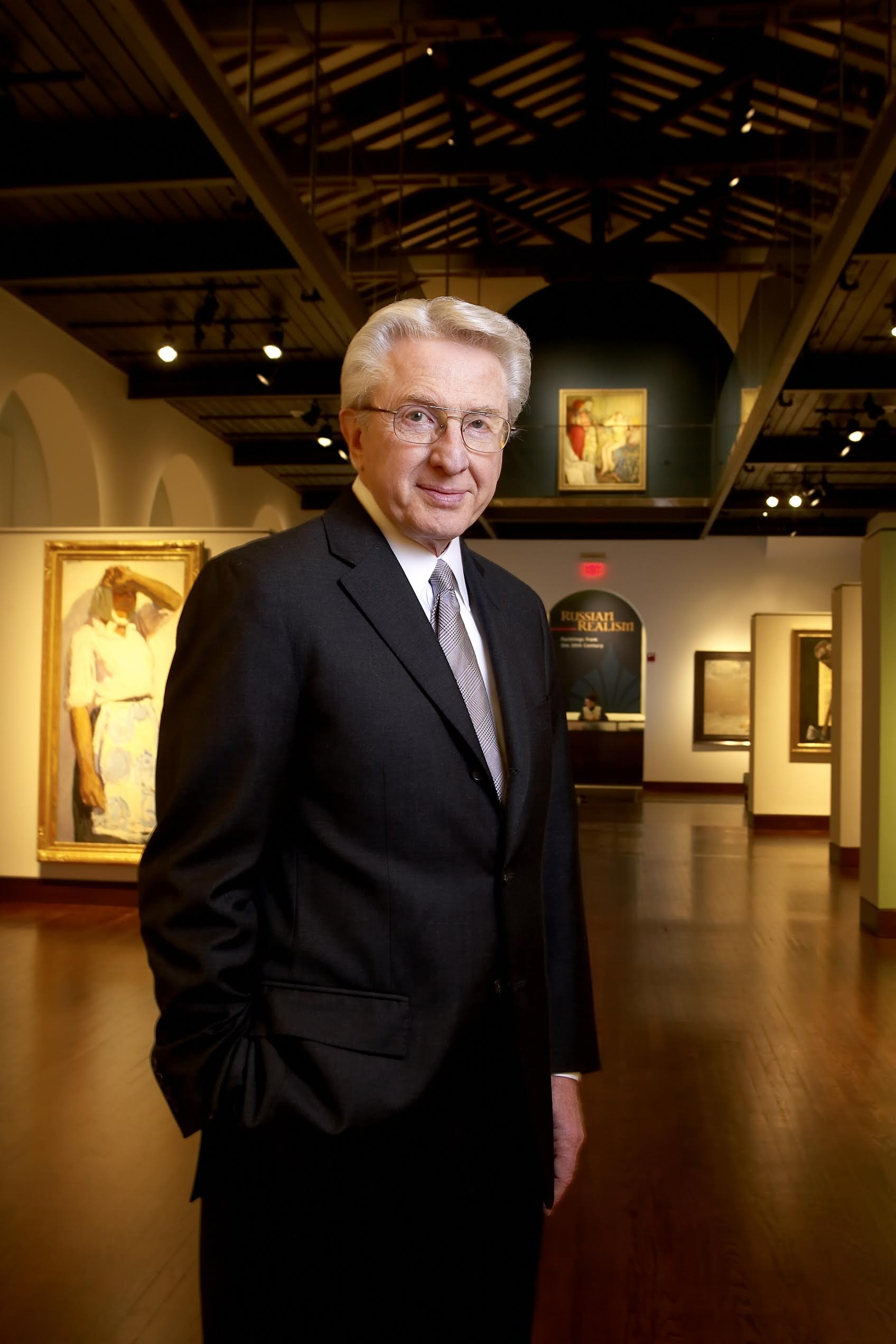
Raymond Johnson is the founder of The Museum of Russian Art.
Since acquiring their collection, the Johnsons take fabricated selected portions available on loan to a diversity of American museums, universities, and cultural institutions for non-commercial exhibition and educational purposes. The Johnsons recognized the importance of their collection and, desiring to create a legacy honoring Russian art, they initiated the idea of a museum dedicated specifically to exhibiting the art of Russia. They founded The Museum of Russian Fine art (TMORA) at a Bloomington, Minnesota location in 2002, and the Museum'south inaugural public exhibition took place that year. With the mission of promoting education, enlightenment, and date through the fine art of Russian federation, the Museum received its (501)(c)(iii) condition as a not-turn a profit corporation from the IRS in 2002, as well.
TMORA is governed by an contained Board of Trustees. In 2005, the Museum moved from its original Bloomington site to its current location in Minneapolis. The Museum continues to expand its focus beyond xxthursday century paintings with exhibitions of Russian icons, photography, printmaking, lacquer fine art, porcelain, textiles, Soviet posters, Matryoshka dolls, Russian Christmas ornaments, contemporary Russian émigré artists, and beyond. Exhibitions at TMORA are designed by the Museum staff and mostly include works selected from its growing permanent collection, supplemented by items obtained on loan from various museums, individual collectors, and artists. The Museum enhances its continuous program of public exhibitions past sponsoring subject specific lectures, seminars, concerts, and other unique events, which include independent scholars of Russian civilization and other specialties who share their expertise with the TMORA audience.
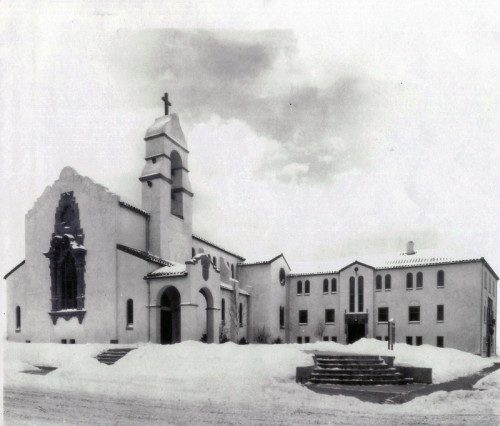 The History of TMORA'southward Unique Edifice
The building manner is Spanish Colonial-Revival, with architectural elements based on the Texas Mission in San Antonio. The façade silhouette resembles Mission San Antonio de Valero, also known as the Alamo. The Rose window and stone carvings are adapted from Mission San Jose y San Miguel de Aguayo, also in San Antonio. The pierced belfry, multiple arches, Romanesque windows, stucco walls, big wooden beams, and terra cotta tile roofs are all common to the Mission style.
The church's first resident pastor, the Rev. Silas Meckel, traveled south to the Mission Valley and according to his girl, Bette Meckel Babcock, fell in dear with the architecture of the Mission Trail. Upon returning to Minnesota Rev. Meckel requested that the new church building building reverberate those Texas Missions. Co-ordinate to church member Marguerite Farnham Drake, "That Spanish Mission style was not a Congregational fashion and it really wasn't a style appropriate for Minnesota, merely it was a style that the Meckels were addicted of and the congregation was extremely fond of the Meckels" (Mayflower Journey, p. 6-vii).
Members' Contributions
Many of the Mayflower members worked on the building site, contributing to the structure. Carl Bard, a founding fellow member of the church building, was the architect. Bard and his partner, Joseph Vanderbilt, designed many of the churches and civic buildings in the area, including the original Mt. Olivet Evangelical Lutheran Church and the Linden Hills Branch Library. The exterior stone carvings were created by early church members David McFarlane and Joe Cobb, owners and operators of the Rich McFarlane Cutting Stone Company (now McFarlane Stone). For The Museum of Russian Art project, the stonework was restored by Dean McFarlane, great-grandson of David McFarlane, standing the multi-generational stone carving tradition.
The Later on Years
The original white chapel was removed in 1940 and a classroom edifice was erected over its foundation. In 1974, the Mayflower congregation moved into its new church across the street. The Castilian Colonial-Revival building was sold to Enga Memorial Chapel, saving information technology from demolition. The funeral home operated for well-nigh 30 years.
The Museum of Russian Art
In early on 2004, The Museum of Russian Art caused the site. Under the direction of Julie Snow, design principal for Julie Snow Architects, Inc., the edifice was converted into a world course fine art museum. The blueprint concept preserves the original architectural graphic symbol, while stylistically distinguishing the new from the one-time. For instance, the new elevator shaft covered in terra cotta tile references the original clay tile roof, while the mezzanine construction is designed for transparency, allowing the art, as well as architectural elements, to be seen throughout the infinite. The museum-quality ecology systems are seamlessly woven into the structure.
The unique building has a rich history of service and dignity. The Museum of Russian Fine art continues these traditions through the exploration of the art and culture of Muscovite Russia, the Russian Empire, the Soviet Marriage, its former republics, and post-Soviet Russian federation.
Source: https://tmora.org/about/history/
0 Response to "Diadem 4th3th Century Bc Found in the Collection of Museum of Russian Art Minneapolis"
Postar um comentário